

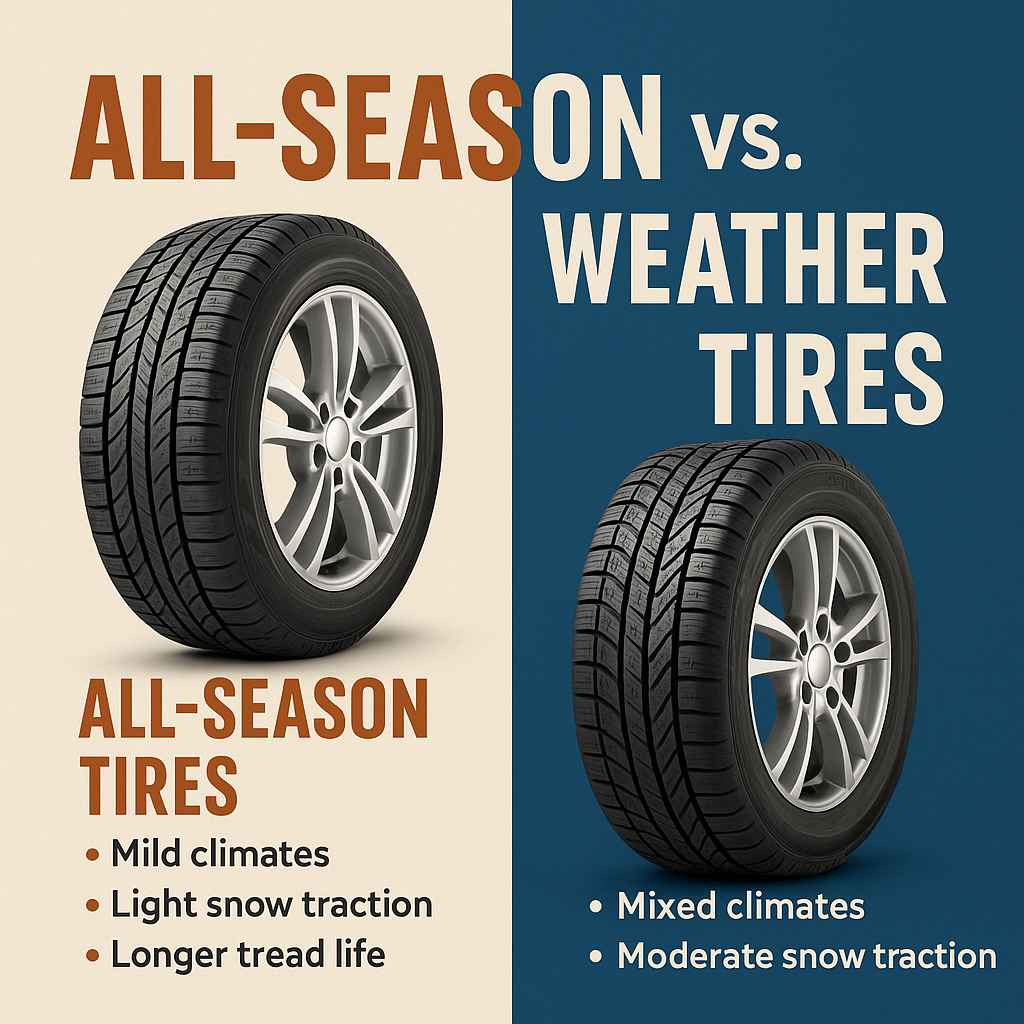
When it comes to choosing tires, most drivers hear two terms that sound almost identical: all-season and all-weather. But these tires are not the same—and choosing the wrong one can impact your safety, handling, and even your wallet.
Here’s a simple breakdown to help you decide which option is best for your vehicle and driving style.
What Are All-Season Tires?
Best for: Mild climates, warm weather, and drivers who rarely see snow.
All-season tires are built to perform well in spring, summer, and fall, and just enough in light winter conditions. They balance good tread life, fuel efficiency, and comfortable rides.
Strengths of All-Season Tires:
- Great road comfort and quiet ride
- Better fuel mileage compared to other tire types
- Long tread life
- Excellent in warm and moderate temperatures
Limitations:
- Not designed for heavy snow or icy roads
- Rubber stiffens in temperatures below 45°F, reducing traction
- Struggles in slush and freezing conditions
Bottom line:
All-season tires are perfect if you live in a place with warm weather and only occasional, very light winter conditions.
What Are All-Weather Tires?
Best for: Areas with unpredictable weather—cold, rain, slush, and moderate snowfall.
All-weather tires fill the gap between all-season and winter tires. They stay flexible in colder temperatures and carry the Three-Peak Mountain Snowflake (3PMSF) symbol, meaning they meet true snow-traction standards.
Strengths of All-Weather Tires:
- Reliable performance in rain, cold, and light-to-moderate snow
- Rubber compound stays soft in winter temperatures
- Safer braking and cornering in mixed weather
- Great for drivers who don’t want to switch between winter and summer tires
Limitations:
- Slightly shorter tread life than all-season tires
- Can be a bit louder
- Not ideal for extreme winter storms (you’ll want full winter tires for that)
Bottom line:
All-weather tires are ideal if you deal with cold winters, surprise snowfalls, and shifting temperatures but don’t want the hassle of changing tires twice a year.
Side-by-Side Comparison
| Feature | All-Season Tires | All-Weather Tires |
|---|---|---|
| Best For | Mild climates | Mixed climates |
| Winter Traction | Light only | Moderate snow + certified winter traction |
| Rubber in Cold | Hardens below 45°F | Stays flexible |
| Ride Comfort | Very comfortable | Slightly firmer |
| Tread Life | Longer | Shorter |
| Year-Round Use | Yes, in warm regions | Yes, even in colder regions |
Which Tire Should You Choose?
Use this quick guide:
✔ Choose All-Season Tires if you:
- Live in a warm or moderate climate
- Rarely see snow or ice
- Want long tread life and great ride comfort
✔ Choose All-Weather Tires if you:
- Experience cold winters
- Deal with unpredictable conditions
- Want one tire that handles rain, slush, and snow
- Don’t want to store a second set of tires
Final Thoughts
Choosing the right tire affects your safety, handling, fuel economy, and overall driving experience. Whether you go with all-season or all-weather tires, the best choice always depends on your climate, your driving habits, and how much winter performance you really need.